The End of a Cycle? Newcastle, Eddie Howe and the 2026 Decision That Could Define a New Era
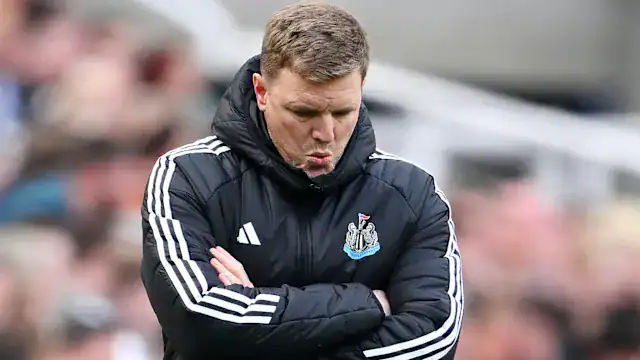
There’s a particular kind of quiet that settles over St James’ Park when a season loses its shape. Not the nerves that used to come with relegation battles, nor the thunder that carried Newcastle into the Champions League again for the first time in two decades, but the hush of uncertainty: are we still on the right path, or has the project hit its natural ceiling?
Eddie Howe has given Newcastle United order, identity and hope. He has also taken the club to places that felt improbable as recently as 2021, when the team sat marooned in trouble, thin on confidence and thinner on points. But football cycles turn, often faster than we expect. Two things can be true at once: Howe transformed Newcastle, and the current Newcastle feel some distance from their peak. The intensity that once defined the side—“intensity is our identity,” as the mantra went—has dimmed, the high press is less productive, and the possession play has not always compensated when the legs or sharpness weren’t there. This season’s tactical critiques have pointed to a paradox: Newcastle have pressed a lot, but won very little in the final third, an efficiency gap that speaks to either fatigue, cohesion blips, or the need for a different idea of control.
None of this erases the broader uplift in standards Howe engineered, but it sharpens a legitimate question about timing. If football is about cycles, when do you refresh—before you plateau, or after the slide begins? The increasingly pragmatic answer around elite clubs is: you plan early. Not because a change is certain, but because being ready is part of being serious.
With the summer of 2026 looming as a logical inflection point, here are seven candidates, each with a distinct profile, who could credibly take Newcastle’s next step. Some have won more or less than Howe; the context of budget, club size and competitive landscape matters. What follows weighs achievement against means, style against squad fit, and upside against risk, with an eye on availability in 2026.
Thomas Tuchel: The Tactician with Tournament Steel
Thomas Tuchel Celebrates winning the Champions League with Chelsea.
If you’re looking for the most decorated coach on this list, you stop here. Tuchel has won the Champions League with Chelsea, domestic titles with Paris Saint‑Germain, and has guided teams deep into Europe by imposing strict, repeatable structures. His contract as England head coach runs through the 2026 World Cup, short by design, as he and the FA agreed to reassess after the tournament. That puts his availability squarely on the summer 2026 timeline.
Tuchel’s playing career was modest, curtailed by a knee injury, and that biography tends to underscore the obsessive coach he became. The appeal for Newcastle is obvious: detailed, opponent‑specific preparation; defensive organisation that can travel in hostile away fixtures; and the flexibility to switch shapes without losing control. If the club’s pressing game has become high‑effort, low‑yield, Tuchel’s best teams press in shorter, more decisive bursts, then retreat into compactness that starves opponents of space. At Chelsea, he steadied a leaky side, transformed them into a Champions League‑winning machine, and extracted peak levels from defenders and midfielders who had looked average months earlier. That’s the pitch: take a hard‑running, occasionally chaotic team and give it tournament‑grade clarity.
There are cautions. Tuchel’s stints can be combustible. At Paris and Bayern, politics and power dynamics frayed relationships; he demands resources and influence, and he works best inside a structure that’s aligned and robust enough to push back when needed. International management has refreshed him, but returning to club football would mean daily intensity again. Newcastle would need to be certain the sporting department and recruitment processes are mature enough to channel a coach this exacting.
Fit and what he brings: Immediate defensive structure, big‑game coaching, and the authority to set Champions League standards from the first day. Concern: Volatility and the need for absolute alignment above him. Availability: Contract runs to July 2026; decision expected post‑World Cup.
Mauricio Pochettino: Development, Identity and the Premier League Sweet Spot
Mauricio Pochettino currently coaching the USA national team.
Few coaches sell a project better than Pochettino. He remade Southampton and Tottenham with pressing, youth development and team culture, then survived the unforgiving glare of Paris and Chelsea. Since 2024, he has been head coach of the USA on a deal built around the 2026 World Cup. He has admitted he misses the Premier League’s week‑to‑week rhythm and has left the door open, long‑term, to returning to English club football. That makes him another realistic conversation for the summer of 2026.
Pochettino’s playing career was considerable, an Argentina international and European stalwart, and his coaching footprint is unmistakable: clarity of roles, ferocious pressing triggers, and a knack for turning talented squads into cohesive, hungry teams. At Spurs, he elevated a relatively young core into contenders with one of the league’s smallest net spends across that cycle; identity outpaced budget. For Newcastle’s squad, athletic, still with upward mobility, and a pathway from academy to first team he could accelerate, this feels like a natural match.
The limitations? He has been closest to the biggest trophies without quite touching them in European competition, and PSG’s politics remain a bruise on his résumé. International management has fewer daily reps, which could sharpen his appetite to return but also means two years out of club football by 2026. Still, in terms of building a culture and developing players while competing for top‑four, he is near the top of any Premier League shortlist.
Fit and what he brings: Culture‑builder, youth developer, aggressive but controlled pressing, and Premier League fluency. Concern: Would be stepping back into the daily grind after two years with a national team. Availability: Contract aligned to World Cup 2026; open questions after the tournament.
Oliver Glasner: Structure, Over‑Performance and a Knack for Upsetting Giants
Oliver Glasner celebrating after winning the Europa League with Eintracht Frankfurt.
Glasner is the coach you hire when you want instant stability and a clear, modern plan. He built LASK into a domestic disruptor, led Wolfsburg back into the Champions League, and won the Europa League with Eintracht Frankfurt. At Crystal Palace, he delivered club history with their first major trophy, an FA Cup and Community Shield, then took them into Europe, evolving the side into a compact, vertical unit that counterpunches with precision. His Palace contract is due to expire in June 2026, and talks over an extension have reportedly stalled.
Glasner’s playing days were solid rather than starry, but his coaching blueprint is consistent: a back‑three platform, aggressive wing‑backs, and very deliberate pressing cues, organised, not frenetic. He’s shown he can maximise resources and unify dressing rooms quickly. That matters: Eddie Howe’s Newcastle were once the league’s hardest runners; the version of Newcastle that reboots under Glasner would run with purpose, not volume for volume’s sake.
The question is ceiling. With Palace, he has already proven he can give a mid‑budget club a defined identity and lift it above weight class. At Newcastle, bigger budget, bigger expectation, can the same text scale to Champions League knockout rounds? Frankfurt suggests yes; his European record is a selling point.
Fit and what he brings: Immediate defensive structure, a teachable system, and European know‑how on a sensible wage. Concern: Struggled with Palace to break down ‘lesser’ teams in European competition; requires alignment on recruitment to hit his tactical sweet spots. Availability: Contract up June 2026; multiple reports suggest he is keen to go on to a bigger challenge.
Marco Silva: The Team‑Builder Who Squeezes Value from Mid‑Table Budgets
Marco Silva applauding the Fulham fans after a game.
Strip away the noise of short stints at Hull, Watford and Everton and Silva’s last five years at Fulham tell a cleaner story: promotion, stabilisation, and successive top‑half pushes on a disciplined outlay. Fulham rewarded him with a deal to 2026 and have since pursued further talks to keep him, reportedly dangling top‑six level terms. That trajectory underscores two things: his stock remains high, and barring a renewed extension he enters 2026 on an expiring contract.
Silva’s playing career was modest; his managerial identity is not. He coaches organised, front‑foot football, wide players who work, full‑backs who pick their moments, and a midfield that’s more technical than many notice. He has developed players reliably, integrated academy graduates where trust is earned, and worked within financial guardrails, which sharpens his recruitment eye. For Newcastle, Silva looks like an “elevate the floor, keep the ceiling within reach” hire: your worst days become fewer, your best days look well drilled.
The doubts are familiar. His earlier English stints ended abruptly, and some supporters still associate him with short‑term arcs. Fulham under Silva have occasionally flattened against elite pressing sides, and he can be vocal about transfer frustration, though that candour may be a feature, not a bug, for a club that wants accountability.
Fit and what he brings: Premier League‑ready game model, value in the market, and developmental patience without sacrificing competitiveness. Concern: Translating Fulham’s compact success into a Champions League chase; the memory of short spells elsewhere. Availability: Contract to June 2026; club trying to extend, but decision timeline suits Newcastle’s.
Andoni Iraola: Vertical Football and the Courage to Repeat Good Chaos
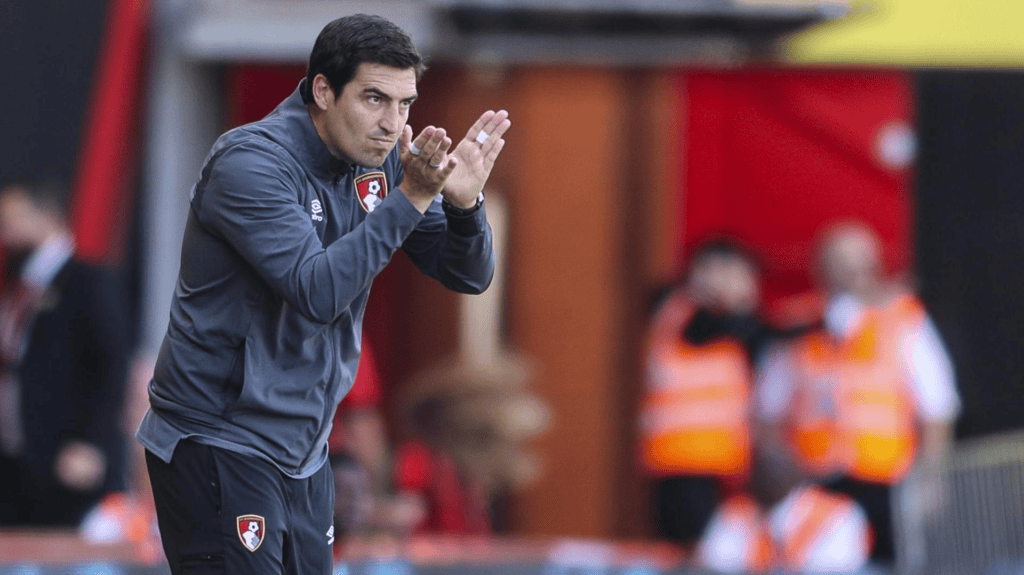
Andoni Iraola on the touchline for Bournemouth after steering them to their highest league finish.
Iraola’s Bournemouth are a case study in modern Premier League problem‑solving: start slowly, stick to principles, and let the game model win over a season. After a rocky first nine matches, the Cherries hit a club‑record points total and gave Iraola a new contract through 2026. His teams play with daring: direct runs, quick diagonals, full‑backs who pin, and onward‑only transitions. At Rayo Vallecano, he punched above budget for three years; at Bournemouth, he has exported that verticality into England.
As a player, Iraola captained Athletic Club and made Spain squads; as a coach, he’s shown he can modernise a team quickly and make them horrible to face without the ball. For Newcastle, the appeal is both philosophical and practical: keep the team’s aggressive DNA, but refine the press and the rest‑defence so that the running pays off. He has also improved forwards, a point of emphasis for Newcastle’s next step, turning volume of entries into quality chances.
Risks are obvious: he is still at the earlier end of his Premier League arc and has not yet coached a club carrying Champions League expectations. His football can look “all or nothing” on bad days. But if Newcastle want to commit to a youthful, energetic identity with a high ceiling and are comfortable handing a big project to a rising coach, Iraola’s case is compelling, and his contract timeline aligns.
Fit and what he brings: Modern pressing‑and‑transition ideas, player development, bravery. Concern: Limited experience at “must‑win now” scale. Availability: Under contract to 2026; would be available in the summer.
Cesc Fàbregas: A Bold Bet on Ideas and Upward Mobility
Cesc Fabregas making an impressive start to his managerial career with Como.
Every shortlist needs one audacious pick. Fàbregas is that, and there’s a method to the audacity. He is now Como’s head coach on a four‑year deal after helping mastermind their rise and promotion, shifting seamlessly from elite playing career to dugout. The club formalised his status when he obtained his badges; by 2025 there were even reports of suitors sounding out his future before Como moved to reinforce their project. In other words, he is not a novelty appointment; he is an appointment by design at a club with ambition.
You know the player: one of the Premier League’s great midfield organisers, a tempo‑setter who saw solutions before others saw problems. As a coach, the ethos mirrors the player, positional clarity, intelligent use of space, patterns to progress under pressure. With Como he has staffed smartly, leaned on development pathways and sold an idea bigger than budget. That’s the relative‑achievement lens that matters here: he’s operating at a smaller club and still elevating standards.
Concerns are unavoidable. The leap from Como to Newcastle, expectation, scrutiny, balance‑sheet power, is vast, and his senior managerial sample size is small. He may also be building a long‑term project in Italy he’s not ready to leave by 2026, given the security and agency he enjoys. But there is a plausible upside play: appointing a generational midfield mind early, surrounding him with heavyweight staff and a strong sporting structure, and letting ideas compound.
Fit and what he brings: Elite game intelligence, a clear possession framework, and a track record—albeit brief—of culture‑building on limited means. Concern: Inexperience at big‑club scale; four‑year Como contract suggests extraction cost and timing complexity. Availability: Contracted through 2028; would require a decisive move and a compelling project pitch.
Marcelino García Toral: Control, Clarity and the 4‑4‑2 That Still Wins
Marcelino Garcia Toral lifting the Copa del Rey trophy with Valencia.
If you want a coach who arrives with a manual and leaves with a team that knows exactly what it is, Marcelino is your man. Twice at Villarreal he has imposed structure, lifted standards, and made the Yellow Submarine punch above their finances, first by hauling them from Segunda to Champions League, then by returning in 2023 to stabilise a listing project. His contract runs through June 2026; the timeline matches Newcastle’s.
He was a solid La Liga player; as a manager he champions a compact 4‑4‑2, ruthless in transition, disciplined without the ball, and sharp on set‑plays. The style is unfashionable only until it wins, Valencia’s 2019 Copa del Rey and serial European runs with Villarreal validate it. For Newcastle, Marcelino offers sobriety: fewer wild swings of performance, more repeatable control, and clear on‑ball patterns that don’t require an all‑action press to generate chances.
The counterpoints are stylistic and contextual. He has never coached in England, and his methods can be demanding and, at times, rigid; the fit depends on squad buy‑in and recruitment that respects his profiles. But if Newcastle want a coach with a high floor, European experience and a proven ability to bring immediate order, Marcelino is the safest pair of hands on this list, and his contract situation makes the conversation straightforward.
Fit and what he brings: Instant structure, European pragmatism, and a record of elevating teams relative to spend. Concern: Stylistic rigidity and no Premier League experience. Availability: Contracted until June 2026.
Framing the Decision: Context, Budgets and What Newcastle Actually Need
It’s tempting to stack CVs and count medals, but this is where relative achievement matters. Glasner’s Europa League with Frankfurt came against superclubs with triple the wage bill; Silva’s stabilisation of Fulham happened without cheque‑book excess; Iraola dragged Rayo and Bournemouth upward with ideas and clarity rather than star power, all whilst regularly losing his best players. Equally, Tuchel and Pochettino bring Champions League final‑week experience, valuable if Newcastle’s aim is to be competitive at that altitude quickly. Fàbregas and Marcelino represent two ends of the risk spectrum: one a high‑upside idea, the other a proven stabiliser.
Overlay that with Newcastle’s present. The team’s high press has at times become labour without leverage; the possession phase hasn’t consistently produced controlled territory; and the away‑form wobble spoke to a side that could no longer bend games to its will. Any successor must solve for those issues with, ideally, fewer miles in the legs, more control in settled possession, and a stronger rest‑defence when counters break. Those are not dreams; they’re coaching choices.
Availability is not incidental. Tuchel and Pochettino are explicitly tethered to World Cup 2026 end‑points; Glasner, Silva and Iraola are contracted through 2026, positioning them for either extension or exit; Fàbregas is longer‑term at Como, but money and project clarity sway decisions; Marcelino’s Villarreal deal lands exactly on the summer 2026 line. That convergence is why planning now is sensible rather than disloyal.
The Summer of 2026: A Choice with Consequences, Even If the Choice Is “No”
This isn’t a call for a sacking. It’s an argument for preparedness. Howe’s work has been foundational, he made Newcastle feel serious again, and the club’s rise under him is a permanent part of the story. But elite football doesn’t allow for drift. The last 18 months have challenged the idea that intensity alone can carry Newcastle through; the pressing has become less efficient, the control less reliable, and the away‑form fragile enough to seed doubt. Improvement is both possible and necessary.
So the conclusion is twofold. First, there is no certainty Howe will be relieved of his duties. He may yet re‑accelerate the project by sharpening the press, refreshing the midfield and re‑establishing the on‑ball composure that once made Newcastle suffocating to play against. Second, whether or not a change comes, the club should be actively modelling the future, because cycles do end, and opportunities align. If Newcastle do reach the point of transition in the summer of 2026, by choice or circumstance, the profiles above offer genuine pathways forward, each weighted differently between risk and reward.
For Howe to be seen as the right man long‑term, it cannot be just about results. The quality of play, the efficiency of the press, the control of territory, the repeatability of chance creation, must rise again. If it does, the conversation cools. If it doesn’t, the next era needs to be ready before the hush becomes an echo.