
The window where nothing quite got “over the line“
There are certain phrases that Newcastle United supporters thought had been retired for good. Especially those relating to the quietly deflating language of inertia.
Close. Explored. Tried. But in the end, nothing quite got “over the line”. Of course, no one in the club would ever dream of using such language, after all, the club’s head of media Lee Marshall was once Mike Ashley’s PR lapdog, so he knows only too well which well-worn phrases will infuriate the fanbase, including whether Dan Burn’s return from injury is “like a new signing…”
That is why the close of this January transfer window has hit so hard. Not because Newcastle United failed to land a superstar. Not because there was a fire sale. But because Eddie Howe’s squad, chasing European progress and a top four finish, emerged from the transfer window exactly as they entered it.
Static.
While we were once well used to this, static feels different now. This is not the Mike Ashley era, where standing still was the business model. This is a club owned by one of the most powerful investment groups in global sport, competing in Europe, supposedly chasing a top four place, and building toward sustained elite status.
So when the rest of the league moves and Newcastle United do not, frustration transforms into something deeper than mere annoyance.
Doubt creeps in.
Not just about January, or even the months ahead. But about the direction of the project itself.
Was this really just a case of “no value in the market”?
The line coming out of St James’ Park is easy to piece together. The January market is inflated. Selling clubs demand premiums. The right players were not available at the right price, and if only they were, Newcastle United would have acted.
But that argument falls apart the moment you look around the league.
This was not a window where only reckless £70m gambles existed. It was a window where clever, PSR-savvy clubs found flexible solutions.
Let’s take one of the shining examples of this, Bournemouth.
When they lost star forward Antoine Semenyo to Manchester City in the first week of the transfer window for a rather measly £64m (he has 14 goals and 4 assists this season across all competitions for both Bournemouth and City, compared to Anthony Elanga’s 2 assists in all competitions), Bournemouth could have panicked.
Instead, they relied on their embedded transfer infrastructure to source low-risk, high-upside young players whom they know Andoni Iraola will thrust into the first-team. In a few savvy moves they layered their squad with future-proofed profiles:
- Rayan Vitor – a young, high-ceiling forward signed for an initial £25m on a long-term deal who has already matched Elanga for goal contributions in the league.
- Alex Toth – another development curve midfielder, signed for just over £10m, and who carries immense resale potential.
This is textbook modern squad building under current financial restraints. Despite having had their squad decimated in recent years, following the sales of star players Dean Huijsen (now at Real Madrid), Ilya Zabarnyi (now at PSG), Milos Kerkez (now at Liverpool), and now Antoine Semenyo to Manchester City, they continue to replenish and remain competitive.
Elsewhere, clubs used loans surgically:
- Douglas Luiz returning to Aston Villa on loan to solve an injury crisis without permanent financial burden (mirroring their moves for Marcus Rashford and Marco Asensio in the previous January window)
- Alex Disasi to West Ham United to plug a defensive hole without long-term risk.
- Angel Gomes to Wolverhampton Wanderers – £1m loan fee, surely would have been an improvement on Joe Willock, whom we could have shifted to Fulham for £20m, netting a better player and a £19m profit in the process.
While these are certainly not glamorous deals, they are PSR-literate deals.
Other clubs were also able to show financial creativity:
- Oscar Bobb to Fulham – a young player with high upside, on a low fee with high resale potential.
- Conor Gallagher to Tottenham Hotspurs – prime-age, a good system fit, previously of interest to Newcastle United.
- Marc Guehi to Manchester City – unlikely to ever have a chance for this one when Manchester City came to the table.
While we can argue as to the nuances of whether we should have been interested in any of these players is for another time, but the point is that this was not chaos spending, or poor value deals.
This was a case of clubs recognising weaknesses, spotting opportunities, and finding structured solutions.
Newcastle United did none of this.
No loan cover. No opportunistic young upside deal. No short-term patch to give breathing room. No creative long-term PSR-savvy structuring.
This is why the “no value in the market” line simply does not land.
There was value. There were solutions. There were smart, low-risk ways to improve. Newcastle United simply were not in a position – financially, structurally, or strategically – to take advantage.
When dogma limits flexibility
It is easy to simply frame January as Newcastle United being boxed in by PSR. It is also possible to frame it as Newcastle United being unconvinced by the market.
But there is a third possibility, and it is a rather uncomfortable, albeit familiar one.
That some of the PSR-savvy deals that other clubs embraced simply did not fit Eddie Howe’s preferences, and as such, may have been quietly dismissed.
Let’s look again at the types of moves other Premier league sides made.
Loans for short-term cover. Young players signed as development bets. Experienced squad options added on six-month deals.
These are pragmatic, flexible moves. They may not always be stylistically perfect. They are not always long-term starters. They are not always players a head coach would hand-pick as part of a grand tactical vision.
They are problem-solvers.
Howe, to his credit and sometimes to Newcastle United’s cost, has always shown a clear preference for:
- Players he fully trusts
- Profiles that match his system demands
- Characters he believes he can coach and develop
- Stability over short-term patchwork
That philosophy helped rebuild the club. It created cohesion. It raised standards.
But in an era restricted by PSR, it can also narrow a club’s ability to manoeuvre flexibly in the market.
Because sometimes the right move in January is not the perfect stylistic fit. It is the player who buys you six months of stability so you can make the ‘perfect’ move in the summer.
If Newcastle United passed on certain loan opportunities or short-term additions because they were a clean fit for Howe’s football, it is not good strategy, but rather dogmatic incompetence.
There remains a question as to whether that dogma is still optimal for the phase Newcastle United are entering.
A squad juggling injuries, contract uncertainty, and PSR constraints may need flexibility more than purity. It may need short-term pragmatism more than long-term symmetry.
If Howe is reluctant to integrate stop-gap players, reluctant to rotate heavily, and reluctant to lean on youth unless absolutely necessary (all of which can reasonably be levelled at him), ownership may start to wonder whether that approach limits the club’s ability to adapt quickly in constrained markets.
While that not make Howe *the* problem, it does raise the possibility that the manager’s strengths – loyalty, clarity, trust, cohesion – may also be part of why Newcastle United struggle to pivot when circumstances demand agility.
That brings us back to the bigger picture.
If the club’s recruitment is shaped heavily by what fits the manager’s exact vision, and PSR then restricts the ability to correct those choices later, the margin for error becomes tiny.
In that environment, January’s stasis stops looking like bad luck and starts looking like a consequence of how the whole football operation is wired.
What does this say about PIF’s ambition?
Which brings us to the bigger question that sits behind the frustration of this window: what does the pace and shape of Newcastle United’s development say about the long-term intent of our current owners?
No one can reasonably argue that the Public Investment Fund of Saudi Arabia have not changed the club. Our transformation from relegation candidates to European competitors happened quickly and decisively. Furthermore, Newcastle United ended their 70-year wait for a domestic trophy under their stewardship. From Wembley days, cup success, and big European nights, some of the greatest memories of our collective lifetimes have occurred under their watch. Immediate transfer spending was heavy, commercial partnerships expanded, and we have re-entered the global football conversation.
Except, long-term football ambition is not measured only in transfer fees. It is measured in the foundations – the kind that outlasts individual managers, sporting directors and star players.
And when you judge the ownership on those foundations rather than the sugar rush of early spending, the picture becomes far less convincing.
The visible, structural transformation that signals generational commitment simply has not materialised at the pace many supporters assumed it would.
Infrastructure: the future, forever on the never never
In modern football, permanence is built in concrete.
Whether that is new or redeveloped stadiums, or world-class training facilities, these are the statements that tell players, sponsors and supporters alike that a club is not temporarily having a moment, but is embedding itself among the elite.
Yet, several years into PIF ownership Newcastle United still operate largely within infrastructure shaped by the previous regime, though the wheely-bin ice baths have thankfully been replaced with an actual hydrotherapy suite. Yes, there have been consultations, concept art, leaked plans and a seemingly never-to-be-published feasibility report, yet no decisive stadium direction and no visible, transformative training ground project.
It is all future tense. All under review. All being explored. The kind of language supporters used to hear in less ambitious eras, where progress was always coming…just not yet.
For an ownership group with vast resources and global ambition for Newcastle United “being in the debate about the top club in the world” by the end of this decade, as CEO David Hopkinson puts it, the ongoing absense of a clear shovel-in-the-ground moment feels less like long-term vision and more like pomp, bluster, and hot air. The club talk constantly about the future, but the future remains, stubbornly, on the never never.
The women’s teams: the simplest statement left unmade
If there is one area in modern football where ambition can be demonstrated quickly, visibly and at relatively low cost, it is the women’s game.
Women’s football is expanding fast. It carries a global reach, growing audiences, and crucially, sits outside the same PSR constraints that limit the men’s transfer market. With modest investment, a club with Newcastle United’s backing could rapidly establish itself as a force at the top of the English and European women’s game.
Instead, Newcastle United Women remain stuck in mid-table in the second tier. No dramatic push, being comfortably beaten by promotion rivals. No real statement of intent with fringe players of bigger teams being bought rather than real ambition being shown. There is no real sign that the club view the women’s team as a pillar of their long-term sporting identity.
Any ownership model that harbours desires to be a global sporting influence will be looking to tap into the immense potential offered by the continued growth of women’s football. This feels less like a simple oversight, and more like indifference.
The academy: a pipeline that’s barely trickling
For most other clubs, youth development is the quiet engine of long-term success. A functioning academy reduces reliance on the transfer market, generates resale value and embeds identity in the first team.
In a PSR restricted era, it is not a romantic extra. It is a financial and sporting necessity.
Yet the output from Newcastle United’s output remains worryingly thin. For example, once highly touted prospects, Ben Parkinson and Cathal Heffernan, recently made permanent moves to Falkirk and Harrogate Town respectively; hardly a glowing indictment of the work being done at academy level. There are few genuine first-team breakthroughs, with Lewis Miley a notable exception. Limited high-value resales, and loan pathways that rarely seem to accelerate development to the level needed.
For a club that excessively relies on PSR as an excuse not to do any transfer business for the first team squad, one would assume investment in a credible and reliable academy pipeline would be seen as not only a strategic investment, but an urgent necessity. Yet, despite several years into new ownership, there should be visible signs of this pipeline beginning to flow. Instead it feels clogged with potential at the top, but very little actually reaching the first team.
Read a more detailed piece on the concerns surrounding our academy here.
Taken together, these are not minor loose ends. They are core pillars of a modern elite football project, and right now, all three are experiencing drift. The stadium’s future is undecided with no progress being made on a new training ground, the women’s side sits in limbo, and the academy pipeline is barely flowing. None of this screams long-term acceleration. None of this suggests a club that will remotely even be in the debate on being the top club in England, never mind the world, by 2030. It suggests a club talking like an elite club while behaving like a mid-table side.
And when the structural progress feels slow, the spotlight inevitably shifts back to the football operation itself.
Were the deals there…but not for Eddie Howe?
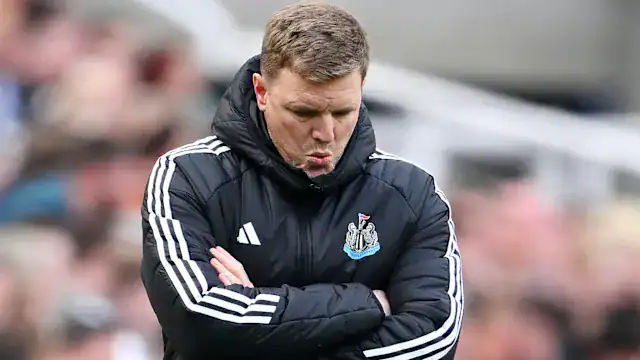
If the long-term build feels hesitant off the pitch, and recruitment feels stuck on it, the spotlight inevitably shifts to the man with the greatest influence over the squad.
It is fair to acknowledge that Eddie Howe operated in difficult circumstances last summer. The club’s executive structure was in transition, key leadership roles were unsettled, and the departure of Alexander Isak forced Newcastle United into a reactive market at the worst possible moment.
That context matters.
But it does not remove the central point: Howe was heavily backed. Around £250 million was committed to players who fit his vision of how this Newcastle United side should evolve.
The return on that investment has, so far, been underwhelming:
- Anthony Elanga was expected to add pace and end product. A solution to the constant thorn on our right-wing. Instead, he was provided just two assists in all competitions, struggles to influence games and looks lost against low-block defences due to his lack of technical ability.
- Yoanne Wissa was chased all summer and arrived for a premium fee. His three goals and one assist in sixteen appearances, with only one league goal, is well short of the reliable attacking output his signing was meant to guarantee.
- Nick Woltemade, who began brightly with nine goals in all competitions, is now on a seven-game league barren run stretching back to December, and increasingly looks stylistically adrift in a high-tempo 4-3-3 system that does not naturally play to his strengths.
- Jacob Ramsey arrived from league rivals Aston Villa for well more than he was worth. Now occupying the role in the squad previously taken by the likes of Sean Longstaff and Joe Willock, it is rather hard to see what value his signing has brought to the side. Yes, he can pass a ball five-yards, but given he spends most of his time on the bench, it is hard to see why we bothered with this one.
These are not bad players. But they have not obviously raised Newcastle United’s ceiling, and in Woltemade’s case the tactical fit remains an open question.
This context matters when assessing the January window just gone.
Because if the club’s power brokers are assessing the summer transfer window and seeing limited on-pitch return from a £250 million outlay, hesitation in January starts to look less like paralysis and more like caution.
Not caution about the market.
Caution about the manager.
That is the uncomfortable layer beneath this window. If recruitment is shaped heavily by Eddie Howe’s preferences, and several of those preferred signings have yet to demonstrably elevate the team, then January becomes a moment of quiet evaluation as much as missed opportunity.
It is not hard to imagine a scenario in which the new executive leadership and ownership group want clearer evidence that the previous investment is delivering before authorising the next wave of spending.
In that reading, January was not simply about PSR.
It was about proof.
And when proof is demanded in elite football, scrutiny of the manager inevitably follows.
The cost of standing still
Whatever the reason for January’s inaction – PSR caution, ownership hesitation, managerial preference, or a quiet erosion of trust in Eddie Howe or a mixture of all four – the football consequences do not wait for boardroom clarity.
They arrive in the fixture list.
And February does not look like a month that forgives thin margins.
Injuries have already stretched key areas of the squad. The midfield engine room has been disrupted, defensive continuity has been broken, and rotation options are limited at the exact moment the calendar becomes relentless. This is not a period where you can coast through games on momentum alone. This is a period that tests depth, adaptability and resilience, all of which have been in short supply this season.
Domestically, the picture is precarious. The Carabao Cup defence is effectively hanging by a thread with the seemingly impossible task of overturning a 2 goal deficit at the Etihad, while the FA Cup has handed us a difficult away trip to high-flying Aston Villa. In the league, the margin for error, which existed all season owing to everyone else’s inconsistency, has now evaporated. The gap to the top four is significant, and rivals who stumbled earlier in the season have found renewed rhythm.
In other words, there is no soft landing.
Europe remains the one thread of optimism. Progress past Qarabag in the Champions League play-off would take us into the last sixteen, potentially setting up a glamour tie against Barcelona or Chelsea. That would be financially valuable and emotionally electric.
It would also add more high-intensity fixtures to an already stretched squad.
That is the dilemma of standing still in January. You are not freezing the season in place. You are asking the same group of players to carry a heavier load, in more competitions, under greater scrutiny, with fewer fresh solutions when problems emerge.
If results go the wrong way over the next four weeks, the narrative around Newcastle United shifts quickly. A campaign that once held multiple avenues for success could narrow to damage limitation in the league and reflections on what might have been.
That is the football cost of inaction. Not theoretical. Not abstract. Immediate.
And when seasons pivot on small margins, the absence of one or two extra options can prove just as decisive as the presence of a marquee signing.
Which leaves one final, uncomfortable question hanging over St James’ Park:
Will standing still cost Newcastle United their season… and Eddie Howe his job?