
There are years that you measure by results, and there are years that you measure by feelings. For Newcastle United, 2025 was both, a ledger of extremes written in ink and emotion. The calendar opened with something that had stopped feeling possible and began to feel mythic: a major domestic trophy. Seventy years since the last one, two generations since the club last placed silver beside the black-and-white, and then, finally, this. The old photographs, the sepia legends, the tales passed down in pubs and living rooms acquired a present tense. It mattered beyond the metal; it gave shape to belief.
If you were there, you might remember the look of the streets: flags pressed to windows, strangers hugging as they watched the club parade the trophy through the streets of Newcastle. The trophy didn’t just end a drought; it consecrated a project. In a city that often experiences football as civic identity, catharsis does not melt away quickly. A parade becomes a pact. The players felt it, the staff felt it, and the supporters carried it into spring like a warmth in the bones. After years of labour under Eddie Howe, the club had something to point to, something that could be held, touched, paraded. The mood, briefly, was weightless.

Image: Newcastle United celebrating the league cup win with a parade through the city.
And yet, football seasons rarely accept neat narratives. The league campaign that followed was not smooth sailing. It was more a grind, emotion threaded with effort, performances built on persistence rather than fluency. Newcastle stumbled over the line to finish fifth, enough to return to the Champions League for the second time in three years, and the achievement was real, the significance undimmed. But that late stagger also left a faint echo. The way the team finished, the fatigue in legs, the looseness in moments that once felt ruthless, was not just an aesthetic note. It spoke to balance and depth and fragility. With hindsight, it read like the prologue to a more testing chapter.
From Parade to Pragmatism
Winning reshapes priorities. The weeks after the trophy were spent navigating the dual task that stands at the heart of Newcastle’s modern ambition: celebrating the moment while securing the next. Fifth place and a Champions League ticket gave the project validation, but it also sharpened the margins. Elite football compresses time. When the energy fades, when the press loses a half-second, when distances balloon between midfield and defence, the game you mean to play becomes a game you chase.
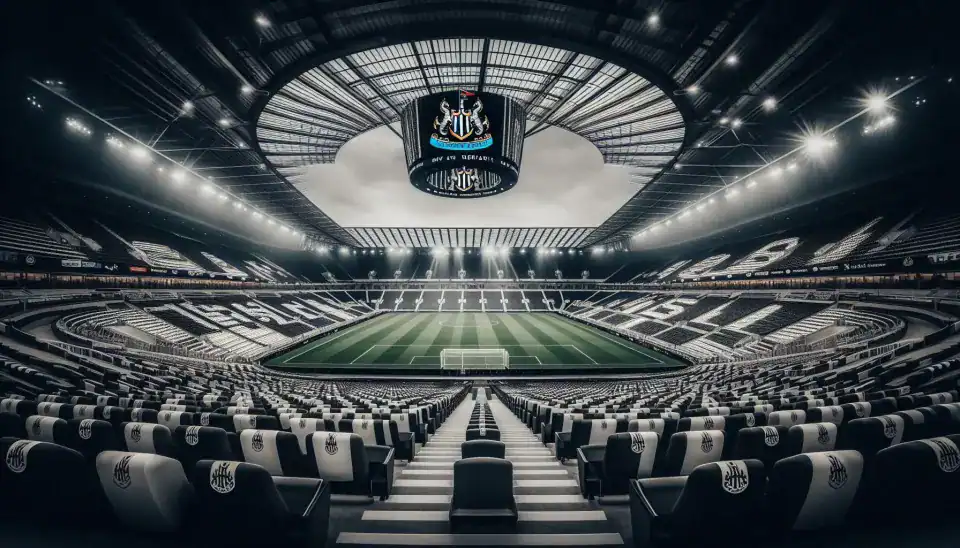
Within the club, the talk was of consolidation, of turning the trophy into a platform rather than an outlier. The past few years have defined an identity: aggressive pressing, direct routes to goal from a high win of possession, and a defensive line that lives boldly. Newcastle’s version of control has rarely been about lingering on the ball. It’s been about recycling pressure, creating second phases where chaos becomes opportunity. That model, when it purrs, makes St James’ Park sound like the inside of a jet engine. But it is also energy-dependent. The sense that the team had limped across the line suggested that summer would need careful calibration: not a reimagining, but a re-arming.
A Summer of Disruption
The summer did not begin with calibration; it began with shock. Alexander Isak refused to train and demanded a move, and when the departure eventually came, it came late, after the season had already started. Timing in football is a kind of invisible currency. You can spend the same money in July and in late August, but what you buy is not the same thing. The late exit removed not only a striker of rare profile, pace, technique, a finishing calm, but disrupted preparation and sequencing.
Newcastle had a list, as all clubs do. Names were lined up with roles and attributes: João Pedro, Benjamin Šeško, Hugo Ekitike. Each fit a different version of the attack’s future, each offered potential to extend rather than merely replace. None came. Pedro went to Chelsea, Šeško to Manchester United, Ekitike to Liverpool. The elite marketplace does not grant sympathy, and the experience felt brutal. You can accept losing a race; it’s harder when you lose three.
The club still spent £250 million and added several players. Activity was not the problem. But activity without coherence is movement without direction, and by the end of the window the view was difficult to deny: the first XI had arguably lost quality, and the squad did not feel meaningfully stronger. Some signings were sensible on paper, age profiles, injury histories, tactical fit—but the top line was softer. The spine, so often the team’s defining feature, felt less certain. Recruitment in modern football is painstaking, iterative, spread across scouting, data, coaching input, financial modelling. Even when you do much right, you need a fulcrum, a defining addition that tilts the team upward. Newcastle didn’t find it. The summer became the season’s seed.
The Autumn Unravelling
You could see the seams loosen in autumn. Matches developed a rhythm that felt familiar in its frustration: a rousing start, a press that initially bit, transitions that suggested a goal was coming, then a drift. Newcastle dropped thirteen points from winning positions, a statistic that cuts to a team’s core. It speaks to game management, to substitution decisions, to emotional control in the final quarter when matches become tests of nerve as much as athleticism. Equally, away form grew brittle. Where the best version of this team had once made away grounds feel quiet, this Newcastle invited noise.
Systems tell stories. Howe’s preferred structure, aggressive without the ball and punchy in the final third, has rarely been seen this season. The midfield’s job is to set the tone; the tone flickered. Opponents passed through the first wave too easily and found space at second balls where Newcastle traditionally eats up yards. The defensive line held high, but the distances back to it were too expansive. Those are small margins; they produce big moments. When you push, you must be close enough to catch. Too often, Newcastle were close enough to chase and not enough to catch.
By the year’s end, the table offered a blunt verdict: tenth in the Premier League. Tables can deceive. This one felt accurate, not catastrophic, but reflective of erosion. The eye test matched the numbers. Performances lacked a complete ninety minutes; good spells were undermined by lapses you could feel coming. The club’s DNA, the clarity of roles, the ferocity in duels, the sense that waves of pressure would eventually break an opponent, looked smudged.
Howe Under Scrutiny
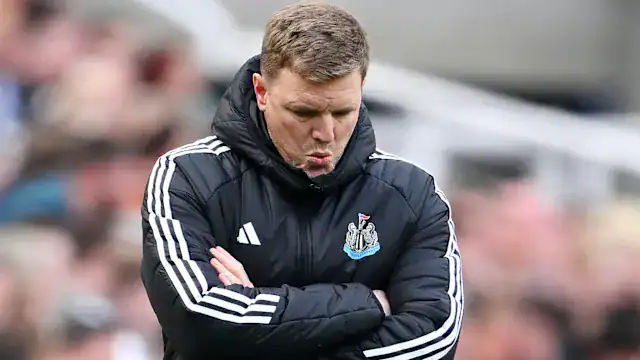
When doubt arrives, it arrives in whispers before it arrives in song. Eddie Howe has earned the right to patience. He took a club teetering on the wrong kind of brink and built it into an idea with outcomes: European football and, crucially, a trophy. He stitched together an identity and moved the baseline upwards. But football does not freeze achievements. It keeps score, and it asks questions.
For the first time in Howe’s reign, a sizable group of supporters began to question him. Not an uprising—only a minority openly call for change—but a shift in mood. Newcastle’s standards have risen; the room has less tolerance for flatness because the club proved that a higher ceiling is available. That is progress’s paradox: the success that buys you goodwill also raises the bar you are measured against. Howe is not blameless, but he is not a bystander either. The tactical framework remains viable; the execution has frayed. Reconnecting the two is his job and his test.
Managerial scrutiny is often caricatured as in-or-out, failure-or-genius. The real picture is subtler. Howe has decisions to make that go beyond selection. Does he move the team towards control at the cost of edge, especially away from home? Does he accept a lower press line in minutes 70 to 90 to keep leads, even if it dulls the game’s tempo? Does he recalibrate the midfield into a double-pivot for stability, or retain the single anchor in service of aggressive numbers ahead of the ball? Does he change things even more and play his two strikers in a partnership. These are trade-offs. Newcastle’s best nights under Howe have been about refusing trade-offs, pressing and controlling, attacking and protecting. When the structure softens, difficult compromises creep in. He must choose, and then commit.
Rays of Light Amid the Gloom
This is not a season without hope. Cup football and European nights have offered reprieve and rhythm. Newcastle are in the semi-final of the League Cup, a trophy they are looking to defend. In the Champions League, they look set to qualify for the knockout rounds, with the caveat that the new format makes it more favourable, with an increased margin for error.
Meanwhile, the league table is a cruel companion but an intriguing one. Despite poor form, Newcastle are only four points off a Champions League place as the year closes, and no club has made fifth spot their own. You could call it a mirage; you could also call it a ladder. There is enough runway left to build a run, and enough weakness around to make that run count. It would be false to paint the picture as rosy, but it would be equally false to paint it as terminal. The season is salvageable. The story does not demand despair. It demands specificity.
What does turning it around look like in real terms? It starts with end-game management—protecting narrow leads not by hiding but by controlling. It involves bravery: ensuring that when attacks break down, the first pass out is met by structure rather than scramble. It requires reacquaintance with chance quality: committing to cut-backs and near-post runs, to clear routes to goal that players can anticipate rather than improvise. Above all, it asks for Howe to find a way for his team to string results together, without Isak there to produce magic.
The Isak Absence and Its Echoes
It is impossible to assess this season without acknowledging the crater left by Alexander Isak’s late departure. He is, in football’s unsparing taxonomy, a profile more than a name: a striker who stretches the pitch, manipulates centre-backs, slips between lines, and finishes with a composure that calms teammates as much as it hurts opponents. Remove that, and remove it late, and you do not only lose goals. You lose sequencing. Build-up patterns change. The pass that used to be there becomes a hopeful version of itself. Wingers carry weight they once shared. Midfield runners arrive to a box that isn’t shaped for them.
But while losing Isak was damaging, the manner of his exit was even more costly. The club hierarchy and Eddie Howe fought desperately to keep him once it became clear he wanted out. They held their ground, hoping persuasion or price would prevail. In doing so, they made a decision that now looks like a strategic misstep. By delaying the inevitable, Newcastle sacrificed time—the most precious commodity in a transfer window. Every week spent in stalemate was a week lost in pursuit of replacements. Every day of uncertainty narrowed the options. When the move finally materialised, it was late, after the season had begun, and the domino effect was brutal: key targets gone, plans shredded, and a squad left short of its spearhead.
Newcastle’s attack under Howe has rarely been about volume for volume’s sake. It has been about sustained threat, about creating waves of pressure that convert territory into premium chances. Without the central presence of Isak, or a replacement in place early, that threat became intermittent. You could feel the psychology in the final third: a hesitation where there used to be certainty, a pass taken two touches late, a cross that chased rather than invited. Football is a game of inches played in minds. Isak’s absence rearranged both. And the truth is stark: had Newcastle acted sooner, even at the cost of a few million pounds, the disruption might have been contained. Instead, the delay defined the season’s opening act, and its lingering unease.
Midfield Without the Grip
If the attack lost its fulcrum, the midfield lost its grip. Newcastle’s engine room has defined the team’s tone in recent seasons: intense, vertical, organised enough in chaos to win second balls and turn them into platforms. This season, the midfield felt busy but not commanding. Opponents passed out of pressure too often and found space to reset. When Newcastle’s press stuttered, the midfield lacked the compactness to condense the pitch, and the back line had too much grass to defend.
The fixes are not abstract. They involve picking a stable pair for away matches, tightening the distances, and moving from chase to shape when leads arrive. Modern football loves romance, but it is often won in repetition: the ten-yard shuffle that closes a lane, the angle that forces a pass into a trap, the choice to block a counter with a tactical foul rather than a heroic sprint. Newcastle have been heroic under Howe; they must now be slightly more cynical. The best teams are both.
Howe’s Future, the Club’s Future
It is not melodramatic to say the next month or two are defining. Newcastle sit at an inflection point where the season can be rescued or resigned. A bad run of results in January risks rendering the league campaign a series of chases rather than contests, and could see the club out of both the League Cup and the Champions League; a good run transforms proximity into promise.
The conversation about Eddie Howe’s future is new in tone. Most still believe he is the right manager for the journey. The minority calling for change are steadily growing. Yet football does not pause for debates. It rewards action. Howe has to make this team feel like his team again, not just in the press and the plan, but in the calm under pressure, the discipline in the final quarter, the assertiveness away from home. He has already proved the ability to lift a club; now he must prove the ability to stabilise one when the wind picks up.
The good news is that the margins are not enormous. Newcastle do not need reinvention; they need reconnection. Two solid months can redraw the picture. With six home games in the next seven, a good run can change the table’s tone and the season’s mood. A League Cup final would give the year a second pillar. Progress in Europe would inject confidence. The pieces are on the board. The difference lies in whether they are arranged with intention or left to improvise.
As 2025 closes, the feeling is neither euphoria nor despair; it is balanced on a knife edge, with the next month being critical as to which way it falls. The season can be saved or squandered by choices that are as much about mentality as they are about tactics. Newcastle have already reminded the country what it looks like when football belongs to a city. The next chapter will decide whether that feeling becomes habit or returns to hope.
Whatever comes, the story will still be written in black and white. And if the year began with a parade, there is still time, even now, for a march.