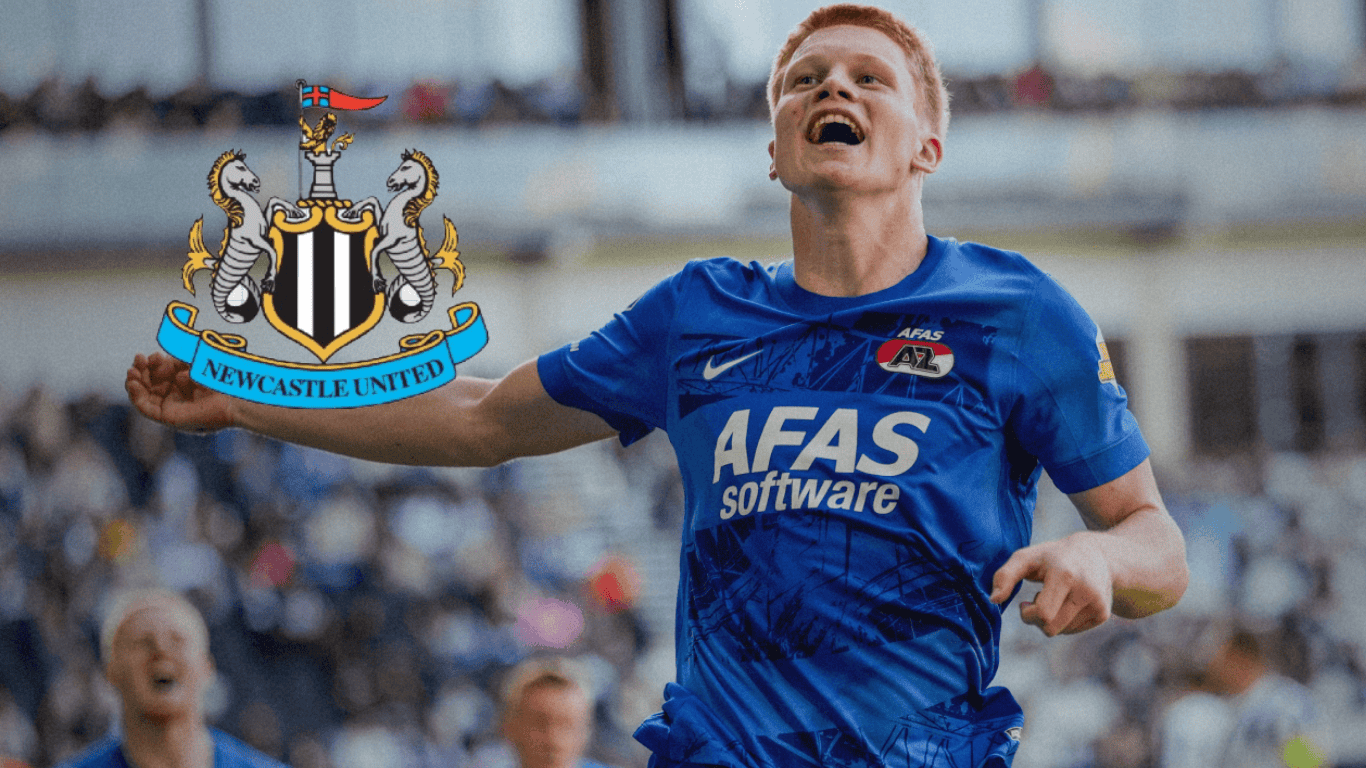

In front of 38,502 fans at St James’ Park in March 2025, Newcastle United Women delivered a memorable victory over Sunderland, a match that set a new Women’s Super League 2 (WSL2) attendance record. It was more than a result. It felt like a statement: that this team belonged on a bigger stage.
And yet, as the 2025–26 season approaches, there’s an uncomfortable question hanging over the club: has the ambition that once defined Newcastle United’s ownership begun to fade? And more specifically has that loss of focus started with the women’s team?
A season that should have been a springboard
Following back-to-back promotions, Newcastle United Women, under head coach Becky Langley, have established themselves as a serious project. Langley, who has led the side since 2019, oversaw the team’s professionalisation and their rise to WSL2. Her long-term contract signals intent from within the football department.
But following the conclusion of the 2024/25 season, 12 players were released, including key names like Katie Barker, Georgia Gibson, and club captain Amber-Keegan Stobbs, players who not only brought experience but also embodied the club’s identity and culture.
This mass exit could have been the start of a bold rebuild. Instead, the club’s business has been tepid.
Transfer window mirrors the men’s: slow, cautious, and underwhelming
The headline arrival this summer was Jordan Nobbs, a decorated former England international and stalwart of the Arsenal side that dominated the WSL. On paper, it’s a statement signing. Nobbs brings leadership, experience, and an elite mentality. But at 32, and having struggled for regular minutes in recent seasons, she represents a short-term boost rather than a long-term building block. It’s a move that grabs headlines, but not necessarily one that signals a strategic shift.
Aoife Mannion, another big name with WSL pedigree, adds further top-level experience to the squad. The former Manchester United and Manchester City centre-back is technically sound and composed in possession — but she also arrives off the back of two ACL injuries and limited game time in recent years. Like Nobbs, she enhances the profile of the team, but at this stage in her career, she represents a calculated gamble rather than a transformative leap forward.
Beyond that, the transfer window has mirrored the men’s: slow, reactive, and underwhelming. Molly Pike and Jemma Purfield are solid, hard-working additions with WSL2 experience but they are not the kind of players that drive promotion campaigns. Pike, 23, arrives from Southampton with promise but little end-product, while Purfield, a well-travelled full-back, offers dependability rather than game-changing quality.
This isn’t a recruitment drive that screams ambition. It’s a patchwork rebuild that suggests caution over conviction. For a club backed by one of the wealthiest ownership groups in world football, the disconnect between resources and reality is hard to ignore. If the objective is promotion to the WSL, the summer’s business doesn’t reflect it.
No PSR restrictions, so what’s stopping them?
Unlike in the men’s game, where Profit and Sustainability Rules (PSR) restrict spending, investing in the women’s team is exempt. This makes the underinvestment all the more baffling. For £20-£30 million, less than the cost of a single mid-tier men’s player, PIF could transform Newcastle United Women into the dominant force in WSL2 and built the foundations of a future top-tier powerhouse.
Instead, spending remains opaque, with the women’s team budget rolled into overall club accounts. There’s been no clear articulation of a strategy for success, no dedicated announcement of facility upgrades, academy investment, or top-level recruitment.
This doesn’t just suggest a lack of urgency. It raises a deeper concern: is Newcastle United Women’s future still a priority for PIF at all?
The Amanda Staveley factor
The timing of this shift cannot be ignored. Amanda Staveley’s exit in summer 2024 removed the most high-profile champion of the women’s project within the club’s senior leadership. Her departure coincides with a noticeable drop in momentum. While the club continues to schedule the occasional St James’ Park fixture for the women’s side, which inevitably draws large, enthusiastic crowds, these headline moments feel increasingly like token gestures.
The day-to-day investment, the real work needed to build a WSL-ready infrastructure, simply isn’t visible.
A fanbase ready, but left waiting
The support for women’s football in the North-East is real. Attendances in recent years have shattered expectations. Promotion was earned through hard graft, not PR spin. The fanbase has done its part. So has the coaching staff. The players, past and present, have built a platform.
Now, it’s over to the owners. And that’s where things begin to wobble.
If PIF were truly serious about building something sustainable, now is when they would act decisively, visibly, and ambitiously. But the flatness of the transfer window, the silence around investment, and the absence of long-term planning tell a different story. A quieter one.
Conclusion: a pivotal season, a fading spotlight?
This season will define the trajectory of Newcastle United Women. They are no longer the underdogs; they are expected to compete. But doing so without significant investment is a gamble. And without clarity or commitment from ownership, the project risks stalling, not for lack of fan support or managerial quality, but because the people with the deepest pockets may simply no longer be looking.
If PIF’s ambition for Newcastle United Women has cooled, then the question becomes more troubling still: has the broader project, once so bold, so charged with intent, begun to dim across the club as a whole?
The next few months may provide the answer.