Newcastle’s Toughest Start Under Howe — And Why This Isn’t the Time to Blink
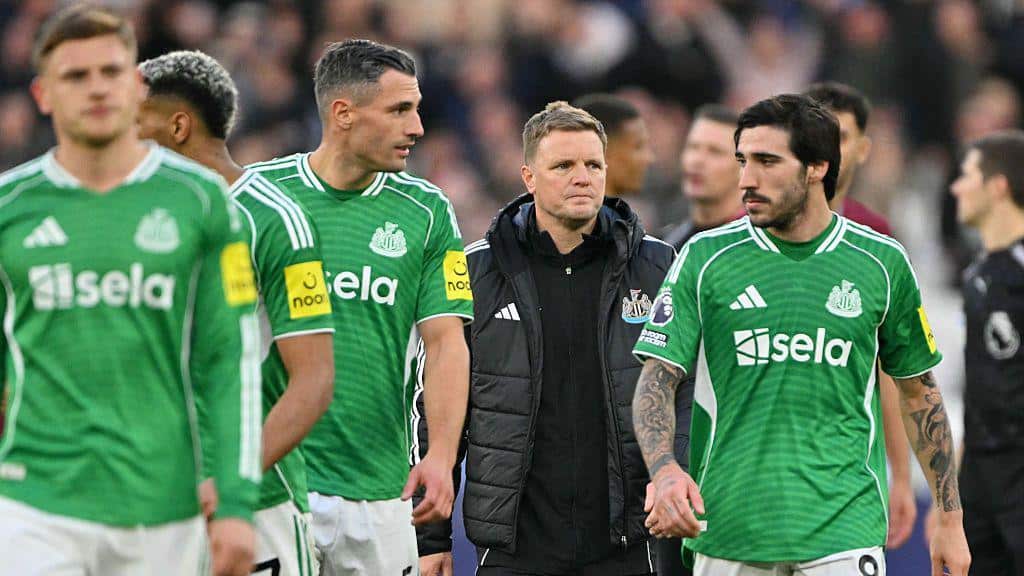
Eleven games in, twelve points on the board. For Newcastle United under Eddie Howe, this is uncharted territory, the slowest opening to a league campaign since his arrival. The contrasts are stark and unavoidable. After 11 matches in each of the previous three seasons, Newcastle stood at 18, 20 and 18 points respectively. This time, it’s 12. It jars because it should. It jars because of the summer, a record-breaking outlay pushing beyond a quarter of a billion pounds, the kind of investment that signals intent, demands traction and sets an expectation. Even with the high-profile sale of Alexander Isak to balance the books, this was a window that targeted players Howe wanted, profiles he has historically elevated, a squad built to meet his demands, not compromise them.
The numbers, on their face, bring anxiety. They paint a picture of a side that hasn’t yet stitched together performance and points, hasn’t found fluency in the ways that have defined the Howe era: aggressive pressing, intelligent rotations, athletic superiority across transitions, and a set-piece ecosystem that once felt inexhaustible. But football seasons are not straight lines, and the construction of a new iteration rarely follows a frictionless arc. What looks like slippage now can be, in time, the gristle that reforms a harder edge.
Context matters — and this is a team in flux, not in freefall
There are valid reasons this start feels dissonant. Squad reshaping of this scale is disruptive by definition. The departure of a talismanic No 9 like Isak removes not just goals but gravity, the way a striker’s presence tugs defensive lines and creates oxygen for others. Integrations take time. Automatism is earned, not bought.
What matters is whether the underlying ideas remain clear, whether the collective buy-in remains intact, and whether performances show enough scaffolding to suggest upward mobility. Howe’s Newcastle have earned the benefit of that doubt. And crucially, they have earned time.
No panic. No quick fixes. No revolving doors.
Mid-season replacements at top clubs rarely deliver the bounce their architects imagine. New ideas meet old squads, schedules compress, and tactical rewiring at Premier League speed is a perilous undertaking. Newcastle do not need a new identity; they need their current one to reassert itself through a period of turbulence. Even if this season doesn’t break the way the model predicted, even if it falls short of the loftiest targets, Howe must be given the opportunity to correct the course.
There is a principle at stake here, not just a plan. Projects that hold their nerve through adversity are the ones that tend to mature into institutions. Howe has already shown, repeatedly, that he can pull a campaign out of a nosedive, shift momentum across a month, and recalibrate the details that decide tight games. Betting against him in November because the first act has misfired is to ignore the body of evidence that brought Newcastle back to relevance.
The ledger of a transformation
When Howe walked through the doors at Benton, Newcastle were favourites for the drop, flat in confidence, brittle in structure. Survival in that first half-season wasn’t just a managerial tick-box; it was a wholesale cultural reboot in the face of gravity. The subsequent rise included two Champions League qualifications, the kind of returns that recalibrate how a club sees itself and how the football world sees it, and, finally, the first domestic silverware in 70 years. These are not modest achievements. They are moments that change the temperature of a football city.
But beyond the trophies and tables lies something harder to measure and easier to feel: hope. Excitement. A sense of intent. Under the previous ownership, Newcastle wilted year on year, ambition steadily compressed into survival metrics. Howe, aligned with a new ownership vision, reversed the emotional current. Home games became events again. Training standards rose. Recruitment was exciting again. There was purpose in the passing and in the planning. That doesn’t evaporate because autumn is choppy.
This is what people mean when they say Howe has “credit in the bank.” It is not nostalgia; it is the recognition that building is non-linear, that setbacks do not invalidate the architecture. Credit in the bank buys space to fix.
The covenant between the stands and the pitch
St James’ Park is not merely a venue. It is an accelerant. When the place is rocking, it bends the match to its own acoustics, squeezes opponents, and lends an extra stride to black-and-white shirts in the 88th minute. Howe and this team need that more than ever. The away end, always thunderous, has to be in full voice, too. Loyalty, though, doesn’t mean blindness. The standard is high; that’s part of what’s been built. Demanding intensity, bravery on the ball, and responsibility without it is not disloyal, it’s the essence of a club rediscovering its ceiling.
The players have their part to play, and many of them know exactly what they owe the manager. Jacob Murphy’s leap from squad player to reliable system piece did not happen by accident. Joelinton’s metamorphosis, from miscast forward to hulking midfield enforcer, is a testament to coaching clarity and personal resilience. Others have solidified places in international squads on the back of performances under Howe, their ceilings raised by a framework designed to make them more than the sum of their parts. The payback now is simple: maximum courage in possession, disciplined aggression without it, and the kind of leadership that travels from training pitch to tunnel to touchline.
Hold your nerve, raise your voice
Newcastle’s worst start under Eddie Howe is a headline, not a verdict. A quarter-billion spent is a pressure point, not a guarantee. This is a difficult start, not a death sentence for a season or a project. The manager has earned the right to adjust, to iterate, to make December look different from October and to make spring feel like the club we’ve come to recognise.
So here’s the rallying cry. Keep the faith, but keep it honest. Back the manager, but keep the standards. Make St James’ Park unbearable for opponents again, and give the away end something to ride on for 90 minutes. Demand passion from the pitch and provide it from the stands. If it doesn’t work, so be it, football is allowed to disappoint. But we owe Eddie Howe this year. We owe him loyalty and respect for what he has built, and the chance to finish what he started.
Because when Newcastle United and their supporters pull in the same direction, this club does not just chase form. It creates force.