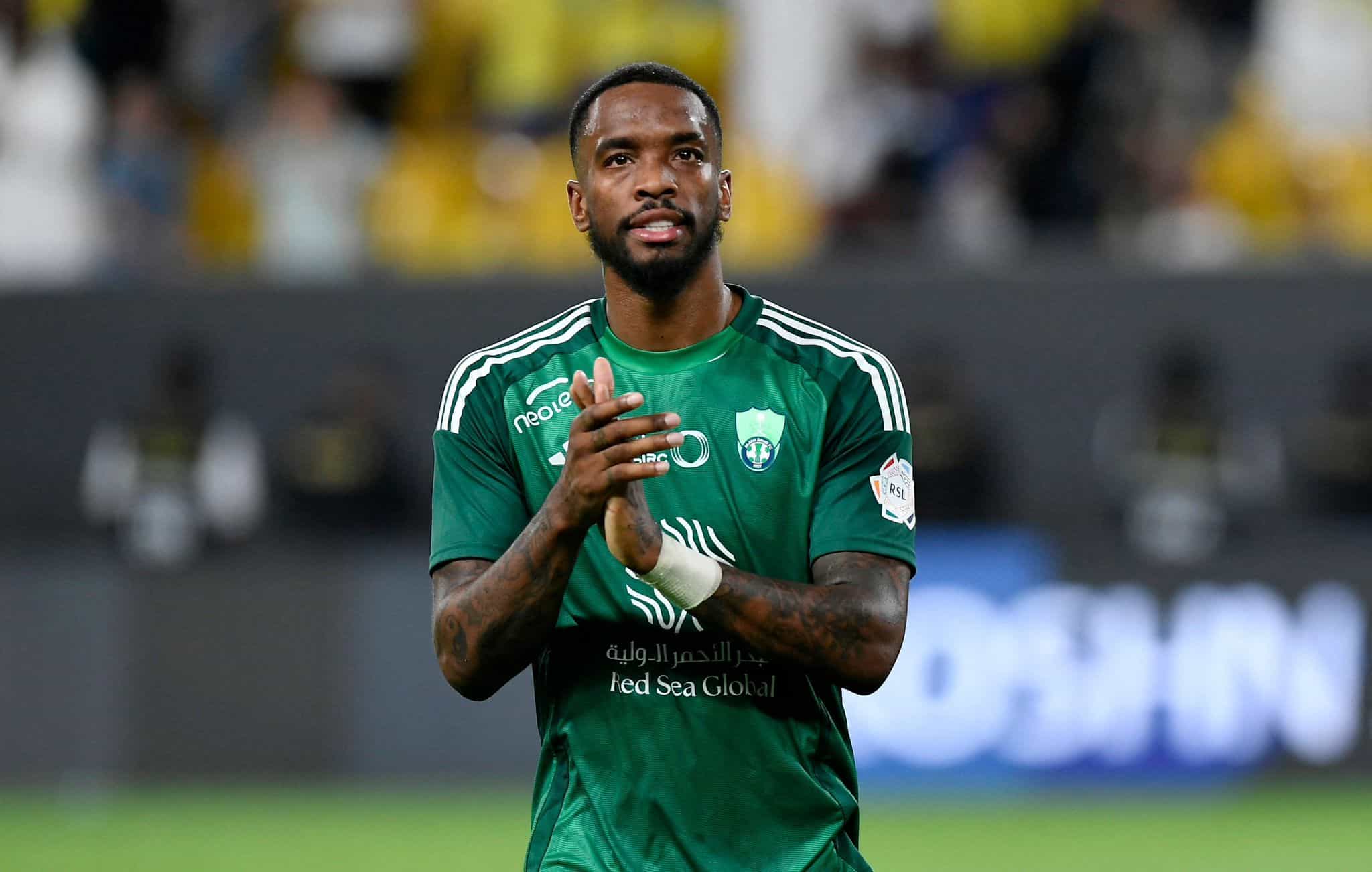
Dominic Calvert-Lewin: The Fashion-Forward Target Man Ready for His Next Chapter
Dominic Calvert-Lewin’s story has never been linear. From the non-league grounds of Stalybridge Celtic to England caps and Goodison Park acclaim, his career has twisted between breakout seasons, frustrating injuries, and personal reinventions. Now 28 and a free agent after nearly a decade at Everton, Calvert-Lewin finds himself at a crossroads, still a tantalising talent, still a polarising figure, and still someone who could offer something special in the right environment.
With Newcastle United reportedly considering him as a backup option to Alexander Isak, the question is simple: is Calvert-Lewin still a viable Premier League striker, or a name now more myth than menace?
💡From Sheffield to the spotlight
Born in Sheffield, Calvert-Lewin began his senior career with the Blades before productive loan spells in non-league and League Two. It was Everton, however, who spotted his Premier League potential, signing him in 2016 for just £1.5 million.
What followed was a gradual rise. The 2020–21 season under Carlo Ancelotti marked his peak: 16 league goals, 21 in all competitions, and his first senior England caps. That year he led Everton in scoring, was named the club’s Player of the Season, and looked like the complete modern No. 9, a striker capable of running channels, pressing intelligently, and dominating in the air.
But the highs have often been undermined by stretches on the treatment table.
🏥 A game shaped by the air — and injuries
At his best, Calvert-Lewin is a unique centre-forward in the Premier League ecosystem. He ranks consistently among the league’s best for aerial duels won and non-penalty xG per 90, as per FBRef. In 2020–21, only three players scored more headed goals than him. His vertical leap, timing, and physical bravery make him a constant threat from crosses.
Yet, his greatest asset has also been his greatest curse: the physical demands of his style have contributed to a string of injuries. Recurring hamstring, quad, and adductor issues saw him miss over 40 matches across the 2021–22, 2022–23, and 2024–25 seasons.
In 2024–25, he made just 26 league appearances, scoring three times. According to FBRef, he underperformed his expected goals by -2.3, finishing the season with 5.28 non-penalty xG. Only Bournemouth’s Dominic Solanke registered a lower shot conversion rate among strikers with 25+ appearances.
That disconnect, getting into the right positions but failing to finish, has become a pattern. Over the past three seasons, Calvert-Lewin has accumulated a negative xG differential of -6.35, the largest underperformance among Premier League forwards in that time frame.
📊 The stats in context
Compared to his peers in the 24/25 season, he doesn’t shape up well.
Alexander Isak scored 17 non penalty goals from an xG of 14.9, a difference of +2.1
Ollie Watkins scored 19 non penalty goals from an xG of 16.5, a difference of +2.5
Dominic Calvert-Lewin scored 3 non penalty goals, from an xG of 5.3, a difference of –2.3
Isak and Watkins are currently converting at above their expected levels, suggesting elite composure and clinical decision-making in the final third. Calvert-Lewin, while still effective in build-up and pressing, is struggling to turn opportunities into goals.
⚪️⚫️ A fit for Newcastle?
Newcastle’s front line is spearheaded by the mercurial Isak, with only a young Will Osula as back up. As a low-risk, high-reward backup on a free transfer, Calvert-Lewin could make sense.
Eddie Howe values work rate, vertical threat, and tactical discipline, all traits the former Everton striker possesses. He wouldn’t be expected to lead the line week in, week out, but could offer vital depth during cup competitions or injury spells.
As a Plan B, his aerial threat offers Newcastle a different dimension, particularly when chasing games or facing low blocks where crosses into the box become essential.
👗 Style, expression, and identity off the pitch
Calvert-Lewin is more than a footballer, and he’s been unapologetic about that. Whether it’s high-end fashion spreads in GQ or experimental outfits in the tunnel, he’s cultivated an image that transcends the sport.
It’s not style for style’s sake, but a form of mental clarity and expression. In a sport that too often boxes players into predictable public personas, Calvert-Lewin stands out, confident, self-assured, and comfortable in his own skin.
Those traits matter. For a player who’s had to fight back from injury, scrutiny, and self-doubt, embracing who he is away from football might be the most powerful display of resilience of all.
✅ Verdict: A risk worth taking
Calvert-Lewin isn’t the guaranteed starter he once looked poised to become. His finishing has regressed, and his body has betrayed him too often. But he remains a talented striker: dominant in the air, intelligent in the press, and capable of scoring in bunches when rhythm finds him.
For a club like Newcastle United, one balancing European ambitions with domestic consistency, he could be a valuable squad player. A stylistic alternative to Isak. A physical, vertical threat late in games. And at zero cost in the transfer market.
It would be a gamble, but a calculated one. And perhaps, finally, the environment he needs to rediscover the version of Dominic Calvert-Lewin that once had England fans dreaming of a new No. 9 era.