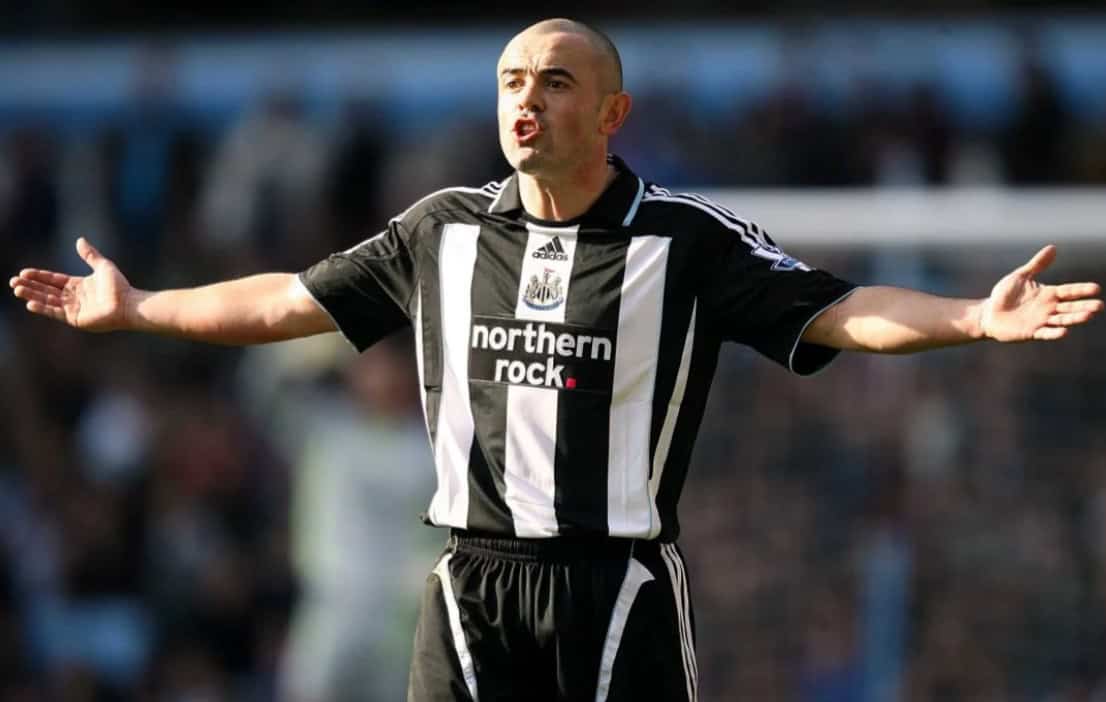
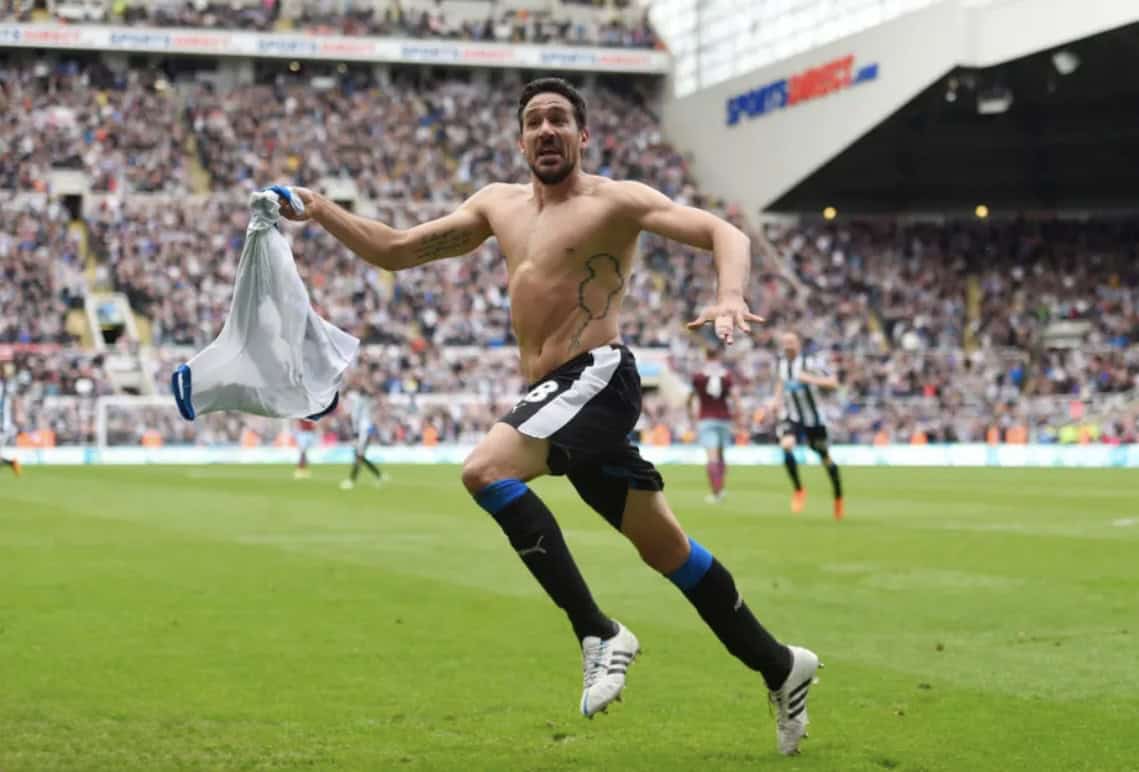
To talk about Gary Speed is to talk about grace, grit, and greatness wrapped in the black and white stripes of Newcastle United. Though his story ended far too soon, the legacy he left behind, especially at St James’ Park, is one that continues to echo around the terraces. For many Newcastle fans, Speed wasn’t just a name on the team sheet, he was a standard-bearer, a player who gave everything, week in, week out. And as time passes, the appreciation for what he brought to the club only grows.
Before the Toon: Speed’s Journey to Tyneside
Born in Mancot, Flintshire in Wales, Gary Speed was football from the get-go. He came through the ranks at Leeds United, where he was part of the storied midfield that led the Whites to the First Division title in 1991-92, the final season before the Premier League era began. Alongside the likes of David Batty and Gordon Strachan, Speed earned a reputation as a technically gifted, hard-working midfielder with a knack for goals and leadership.
A move to Everton followed in 1996, where he captained the Toffees, but despite his personal success, the team struggled. In 1998, after a brief stint of discontent under Howard Kendall, Speed made the move to Newcastle United, a decision that would define the prime of his career.
The Engine of the Entertainers: Speed at Newcastle United (1998–2004)
When Gary Speed signed for Newcastle in February 1998 for £5.5 million, he brought more than just experience, he brought steel, professionalism, and class to a squad in flux.
At that time, the club was still riding the emotional waves of the mid-90s Entertainers era. While the flair of Ginola and the goals of Shearer still lit up St James’ Park, the squad needed balance. That’s exactly what Speed provided.
His debut came under Kenny Dalglish, and though the team struggled that season, finishing 13th, Speed’s influence was already being felt. The following year, under Ruud Gullit, he was a constant presence, but it was under Sir Bobby Robson that Speed’s true importance to Newcastle shone through.
From 1999 to 2004, Speed was the heartbeat of a side that once again dared to dream. With Robson at the helm, Newcastle finished in the top five for three consecutive seasons (2001–2004), playing in the Champions League and once again rubbing shoulders with Europe’s elite. Speed’s partnership with the likes of Kieron Dyer, Jermaine Jenas, and Nobby Solano was central to this success. He was the elder statesman, the mentor, and yet he never looked out of place among the younger legs.
Whether it was ghosting into the box for a trademark header or putting in a thunderous challenge in midfield, Speed played with a tireless energy. One of his most famous goals came in a 3-1 win over Everton in 2002, a powerful bullet header that reminded fans of his attacking threat. But it wasn’t just what he did, it was how he did it: never showy, never dramatic, always professional.
Toon fans loved him not just for his footballing quality, but because he seemed to get Newcastle, its people, its passion, its pain. He was never one to seek the spotlight, but he never shrank from it either. He led by example, and in a city where effort is worshipped as much as flair, Gary Speed was revered.
By the time he left the club in 2004, Speed had played over 200 times in black and white. He didn’t leave because he was no longer good enough, far from it. He simply felt the time was right to move on, and he left with the fans’ respect firmly intact.
Beyond the Tyne: Bolton, Blades, and the Bench
After leaving Newcastle, Speed joined Bolton Wanderers, continuing to defy the aging curve. In fact, in 2006, he became the first player to make 500 Premier League appearances, a testament to his fitness and consistency. From Bolton, he moved to Sheffield United, eventually transitioning into a coaching role, where he showed early promise as a football thinker and mentor.
In 2010, he was appointed manager of the Welsh national team. And though his time at the helm was tragically brief, he laid the foundations for a golden generation. Many players, Gareth Bale, Aaron Ramsey, Joe Allen, have since spoken about the belief and culture Speed instilled in the squad. Wales’ run to the Euro 2016 semi-final was, in many ways, a tribute to Speed’s groundwork.
A Life That Echoes
Gary Speed’s death in November 2011 shocked the footballing world. He was just 42. The outpouring of grief from fans, players, managers, and clubs was unprecedented, and Newcastle was no exception. At St James’ Park, scarves, shirts, and flowers filled the gates in tribute. Fans sang his name not in sadness, but in gratitude.
Alan Shearer, his close friend and former teammate, called him “a star on and off the pitch.” That sentiment was shared by thousands. He was, and remains, a symbol of all that is good in football: loyalty, effort, humility.
Remembering Speed in Black and White
There’s a moment many Newcastle fans remember clearly, Speed, clapping the Gallowgate after a tough game, sweat-soaked, sleeves rolled up, chin high. That image, more than any goal or stat, captures what he meant to the club. He was Newcastle, in many ways: proud, driven, honest.
In a city that never forgets its heroes, Gary Speed remains one of the most beloved. He wasn’t born in the North East, but he played like someone who had it in his blood. And maybe, in a way, he did.
If you’re struggling with your mental health, you’re not alone—please speak to someone. Help is available. UK based readers can contact Mind at 0300 123 3393 or the Samaritans 24/7 on 116 123. For international readers, please search for local support online.